Juvenile in Justice Project
Juvenile in Justice is an image-based project aiming to document the placement and treatment of American Juveniles housed by law in facilities that treat, confine, punish, assist and, occasionally, harm them. Richard Ross, a California-based photographer, began the project five years ago and it has been traveling as an art exhibit around the world for the last year.
From the website:
Juvenile in Justice includes images of over 1,000 juveniles and administrators over 200 facilities in 31 states in the U.S, plus extensive information collected from interviews. The hope is that by seeing these images, people will have a better understanding of the conditions that exist. Children’s identities are always protected and faces are never shown.
Juvenile In Justice is a unique source for images of the American juvenile justice system, which are made available to all institutions and non-profits aimed at youth justice system reform– including the Annie E. Casey Foundation, Campaign for Youth Justice, Equal Justice Initiative, Southern Poverty Law Center, and the Juvenile Justice Information Exchange.
It was difficult to find any information about how Ross gained access into so many facilities and was able to interview so many young people. The only limited explanation of the process that I could find was in a press release for the Ronald Feldman gallery in New York City (one of the hosts for the traveling exhibit). It reads:
Ross gains access to the spaces of incarceration, and those working and living within them, through a complicated process of obtaining permission from all levels of administration, permission that is often at the discretion of individuals working in the system. [He says,] ‘I wanted to give a voice to those with the least amount of authority in any U.S. confinement system.’
It is interesting to consider the relationships among “youth,” “media” and “educational justice” as they intersect and emerge within the Juvenile in Justice project. Ross uses familiar art forms (photographs, video, audio recordings) to tell the stories of young people in the juvenile justice system. His work provides an incredible rarely accessible insight into what detention centers and incarcerated youth look like. While the quality of the footage both still and moving is quite beautiful, the images are chilling yet moving. At the same time, however, it is necessary to offer questions about space, audience, and power as they relate to this project.
By “space” I’m referring to the art galleries around the world that have hosted the traveling exhibition, displaying the project’s artifacts. I wonder about what we tend to associate with an “art gallery,” what assumptions we might make about who has access to these spaces? What kind of conversations are had in these spaces? Are the stark white walls and rather sterilized curation of the photographs meant to ironically mimic the environment of a detention center?
Closely tied to space, I think about how notions of “audience” relate to this project. Who is the target audience of this work? Who are the stakeholders? And which audiences have access to the spaces in which this work is shared?
And finally, “power.” It is always crucial to consider the inherent power dynamics that [tend to] exist between adults and young people, especially when the young people are already involved in a system that has rendered them completely powerless (in this case the juvenile justice system, specifically juvenile detention centers). Ross has documented and exposed this aspect of the juvenile justice system in an incredibly raw and unique way, and it is possible that drawing attention to this topic may result in a greater sense of accountability on the part of the justice system. Yet, we must also think about how Ross’ presence in the detention centers — his photographing, interviewing, etc. — may have been received not only by staff but by the young people. Where do we draw the line between voyeurism and educational justice?
I pose these questions not necessarily to elicit answers, but rather in attempts to encourage us all to remember, like John Dewey (1980), that “a work of art is not the object itself–the physical painting, sculpture or photograph…but what the work does ‘in and with human experience'” (cited by Hubard, 2013). Our lived experiences, the contexts within and lenses through which people may see and interact with these pieces are different and that is an important reality to keep in mind.
Who is Avonte Oquendo?
“Attempting to transform “our taken-for-granted frames of reference” into frames that are “more inclusive, discriminating, open, emotionally capable of change, and reflective” (Mezirow, 2000, p. 8) is especially challenging when the transformation involves deeply held beliefs about one’s basic self-concept or identity” (European-American Collaborative Challenging Whiteness, 2005, p. 121).
“The NYPD is looking in previously searched areas for Avonte. Police have scoured train stations and subway tunnels to find the mute, autistic teen because he is fascinated by trains.” (abcnews.com)
I need to write about Avonte. No, I need to write for Avonte.
Not because Avonte Oquendo has been missing for three weeks, though it troubles me. I need to write for Avonte because when I google his name all that pops up are news articles about the what and when. What happened? He ran away. When? During school. I need to write about Avonte because very few articles talk about who he is, what he thinks, what he feels. He is a subject we talk about, instead of a person who is a valued member of society. Oh yes, he is autistic, and mute. We need to find this child who “suffers from autism” as I keep hearing on the recorded subway message every day. I need to write for Avonte, because for me, he has become a symbol of the youth who remain silent in our city.
Perhaps it is because he represents the silent, those who cannot defend themselves, that if we find Avonte, we can sleep at night. We saved him! But saved him from who? There is an implicit message is: Avonte cannot save himself. He is running away because he doesn’t know any better. Forget that he might have run away because his school was boring. In the media, he is presumed incompetent. His story becomes irrelevant because it has already been constructed by the news outlets who so desperately call for his return.
Yes, Avonte is labelled autistic, and yes, he does not use oral communication. Still, how should we conceive of knowing Avonte? One mode that we privilege in our society, verbal communication, is not his chosen mode of participation. Some articles refer to him as mute, others says he is non-verbal (an often used term in New York City’s special education discourse). No one writes about him. As a fourteen year old boy, one with a story to tell, with preferences, with thoughts and feelings. Since they cannot be communicated through speaking, they remain unknown—at least in the mass media. I imagine if you spoke to Avonte’s family they would tell you quickly, his favorite food, the shows he watches on TV, what subject he likes in school. There are many other modes of participation, different modalities for telling ones story.
I worked for three years as a teacher in District 75, the special education district in New York City. My first year we received a grant that gave us materials and resources (Teaching Artists) to support our students in writing a musical. The youth at my school wrote the play, music, lyrics, made the sets, designed the costumes. The opening song: No one wants to be forgotten, no one wants to be left behind. Sad, lost, mad, frustrated. I want to hit something. I never forgot those words because that was the first time I realized how I was constructing the identity of the youth I was working with. I would argue the same type of identity constructions happens with court involved youth. I think as the quote at the beginning states that it is only through examining our own beliefs and identity that we can begin to transform. Why do we allow Avonte (and other youth) to be constructed as silent? How do we stop treating youth as subjects and develop capacity oriented models by which to re-imagine and understand youth.
I hope that more people write for Avonte and I hope that he finds his way home. Mostly, I hope at some point in the not so distant future we get to hear his story.
Avonte Oquendo left his school is Rego Park, Queens, three weeks ago. For more information about Avonte Oquendo please read the following article: http://amsterdamnews.com/news/2013/oct/17/find-missing-autistic-teen-avonte-oquendo/ (Amsterdam News: The new Black view).
Foster Youth And Higher Education
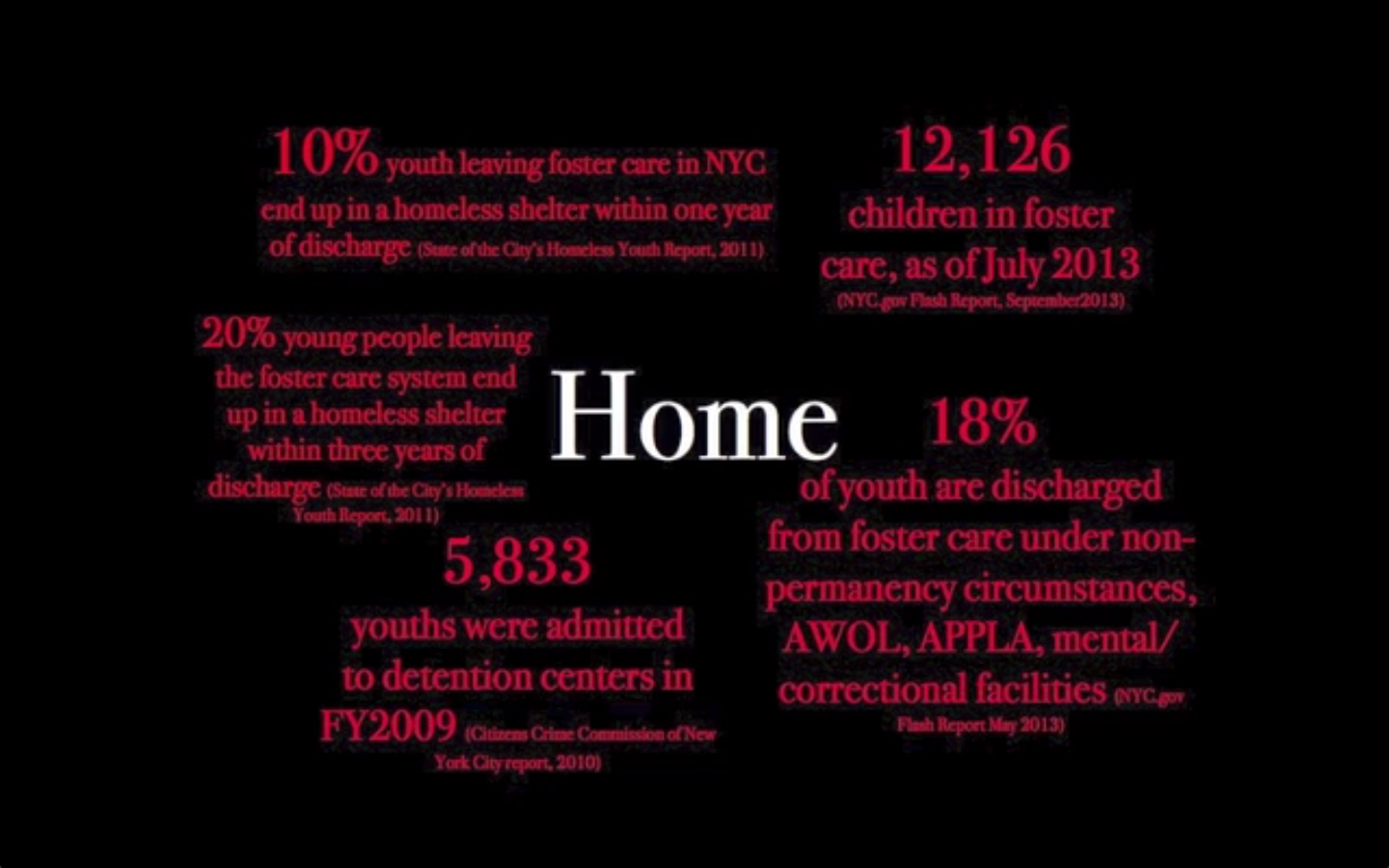
According to research from Casey Family Programs, a national charitable foundation working to improve the lives of children in foster care, estimates suggest that only about 7 to 13 percent of youth from foster care enroll in higher education. Out of those who matriculate to postsecondary institutions, only 2 percent of young people from foster care obtain bachelor’s degrees, in comparison to 24 percent of adults in the general population. Such sobering statistics reflect the critical need for policymakers, child welfare agencies, government officials, higher education systems, and educators at the secondary and postsecondary levels to address this issue facing approximately 20,000 youth age 16 and older who transition or “age” out of foster care each year.
Recently, several colleges and universities across the country have answered the call for action by creating programs that help foster care youth to fund and complete their college education. One such initiative, the Seita Scholars Program at Western Michigan University, has received accolades for its work supporting the educational attainment and life outcomes of youth and young adults (12-25 years old) who have lived some or all of their years in foster care. The program, now in its fifth year, provides tuition assistance and extensive student support services including mental health counseling, life skills training, and career planning to foster youth who have lived in foster care on or after their 14th birthday. Seita Scholars experience on-on-one coaching to help them navigate both the challenges of college life as well as those of the adult world more broadly, including filing tax returns, applying for Medicaid, and budgeting their weekly expenses. Given that many students from foster care do not have a permanent residence, the program ensures that a WMU dormitory is kept open through school recesses and summer breaks and organizes community meals and activities on holidays. Academic tutoring is available to all scholarship recipients as well as career advising and assistance with locating internships and employment opportunities in the Kalamazoo, Michigan community.
The Seita Scholars Program is an example of a comprehensive approach to assisting youth and young adults who age out of foster care. Its success can be attributed, in part, to its focus on the future rather than the past. While acknowledging and not diminishing the fact that many of its students have experienced trauma and harrowing life experiences, the program’s emphasis is on moving forward and equipping youth with the tools to manage difficulties, access resources, and succeed in college and beyond.
For more information, please visit:
Click to access SupportingSuccess.pdf
Paint Me Like I Am
Paint Me Like I Am
By Shirkey Warthen
2009
Why don’t you paint me
Like I am?
Paint me light brown caramel
Five foot ten
Paint me with a different brush.
Paint me zooming, going fast
‘Cause I’m in a rush
And my ashy knuckles
Are all worn out
Paint me everlasting.
Paint me the real deal,
Not drawn out.
Paint me in my real authentic self
Somewhere in southwest
Somewhere on 54th Street
With all the fellas, all the chicks
Chillin’ & partying in the streets
Where we need 2 decrease
The violence and increase the peace.
Paint me without my shout out ways.
That were supposed to be left behind
In my shout out days.
Paint me so my Mom notices me
And the haters don’t.
Paint me with nice colors,
But most of all
Paint me Black
Because I love being colored.
If you drive by 5550 Chester Avenue in Southwest Philadelphia, you will see a newly installed mural—a mosaic of colors that frame a black figure. On September 17, 2013, the City of Philadelphia Mural Arts Program held a dedication for “Paint Me Like I Am,” its most recent mural dedicated to Shirkey Warthen, a passionate and dedicated Youth Advocate at the Juvenile Law Center who was shot and killed on April 17, 2012.
Shirkey joined the Juveniles for Justice Program after spending two years in placement at a youth criminal facility when he was 14. According to the Juvenile Law Center’s executive director Robert Schwartz, “Shirkey saw his juvenile justice system involvement as an opportunity to change not only his life, but the lives of other young people who faced similar circumstances.”
During his time at Juveniles for Justice, Shirkey worked with his peers to create a legislative campaign to ensure staff in detention facilities were not harming youth. He travelled to Washington, D.C to meet with Congressional staffers on Capitol Hill to advocate for this important cause, urging them to pass the Juvenile Justice and Delinquency Prevention Act that was then up for reauthorization. Back at the Justice Law Center, Shirkey recruited new Juveniles for Justice members, led community meetings, and advocated for change to members of the Philadelphia School Board, city government, Philadelphia Police, and Department of Human Services. According to Juvenile Law Center’s Staff Attorney Riya Shah, “He (Shirkey) knew he was speaking on behalf of the thousands of youth in the juvenile justice system and he made sure that his voice was heard.”
Shirkey was a role model for his fellow youth advocates and for those in his community. As Shah explains, “He watched as many people in his life were pulled back into the juvenile or criminal justice system. But he was determined to stay on track and complete his goals.” Prior to his tragic passing, Shirkey had recently completed his GED, gotten engaged to his longtime girlfriend, and found a job at the Logan steel plant. “With each advancement he made, he was always reaching back to pull the next person forward,” offers Shah.
Shirkey’s tragic passing left behind his mother, daughter, fiancée, nine brothers and sisters, and 14 nephews and nieces. Reflecting on his legacy at Shirkey’s memorial service in 2012, Shah poignantly explained,
“His resilience and passion for making a difference influenced not only his peers but also me and the rest of our staff. In our work, we constantly see young people who are defeated by broken systems. But Shirkey wasn’t defeated. He was inspired by the broken system – inspired to make it better. He didn’t just want to change his own life; he wanted to change the lives of others. He didn’t just want to better himself; he wanted to better his community.”
Perhaps Shirkey’s greatest legacy is captured in the third stanza of his poem “Paint Me Like I Am,” now immortalized in the mural watching over his old neighborhood, “Paint me in my real authentic self/Somewhere in the southwest/Somewhere on 54th Street/With all the fellas, all the chicks/Chillin’ & partying in the streets/Where we need 2 decrease/The violence and increase the peace.”
For More Information:
Selling yourself for a home
I recently came across the article about Davion, a 15-year-old orphan living in St. Petersburg, Florida. Having spent his life in the foster care system, Davion took a pastor’s message that God helped people that helped himself, and therefore took to a local church to make a plea that someone adopt him.
This story caused me to take pause to think about both Davion’s bravery, but also how discouraging it is that the children in our foster care system feel the need to take to a pulpit, a platform, a stage to market themselves as valuable humans worthy of a home and family, something so many take for granted. To stand in front of a group of strangers hoping that one of them might want you or know someone who might want you is utterly heartbreaking.
At the time of this post, Davion has not yet found a home, though it is reported that several people have inquired about him. This is discouraging to hear though as it would be a joyful ending that Davion had found a home but equally troubling at the precedent it would set. Would foster parents or foster homes take to “auctioning” off children, or exploiting them in some way to move them along? However it also raises the concern that perhaps the foster care system is too “out of sight out of mind” for most Americans, and Davion’s step to the front of the church is symbolic of how the entire foster care system should be a more central point of conversation and policy making in this country. However, in doing this a balance would have to be found that bring foster care to the spotlight without exploiting the children who are a part of it.
I hope Davion is matched with a family–someone to take him to football practice and provide him what he has waited so long to find. That would be my hope for every foster child. The question is, short of every child in the foster care system having to sell themselves on a stage, how do we take the burden and place the system on the stage instead?
Related articles
- Florida Orphan Pleads for Family to ‘Love Me Until I Die’ (abcnews.go.com)
Engaging Youth as Active Participants In/For Social Change
 What do texting, hanging out, breaking bread, and laughter have in common? They are all practices central to Tara Conley‘s thoughtful and pathbreaking work in embracing a participatory design approach to the critical engagement of youth in the creation of a digital artifact that is meant to support their wellbeing. This is participatory prototyping at its best. (Wanna know more? Check out Tara’s talk — details below.)
Tara, a doctoral candidate at Teachers College and founder of Media Make Change (and YMEJ project team member), kicked off this year’s Racial Literacy Roundtable (RLR) Series (founded by Prof. Yolanda Sealey-Ruiz)– this year’s focus: The Year of the Youth — on Monday night with an interactive and highly participatory presentation in which she explored for the audience the affordances and challenges of pursuing this form of action-oriented research.
Central to Tara’s mission is finding innovative ways to leverage everyday media and technology resources to create opportunities to interrupt and transform geographies of dislocation, particularly among young people who experience social and institutional marginalization on a regular basis. (Multiple forms of dislocation are especially evident in the lives of court-involved youth with whom she and we work on a regular basis.) She pursues this goal — what she called her life’s work — not only seeking out young people’s input, but by co-constructing the research and design contexts, direction, and intention with them (not a seamless, but definitely worthwhile undertaking).

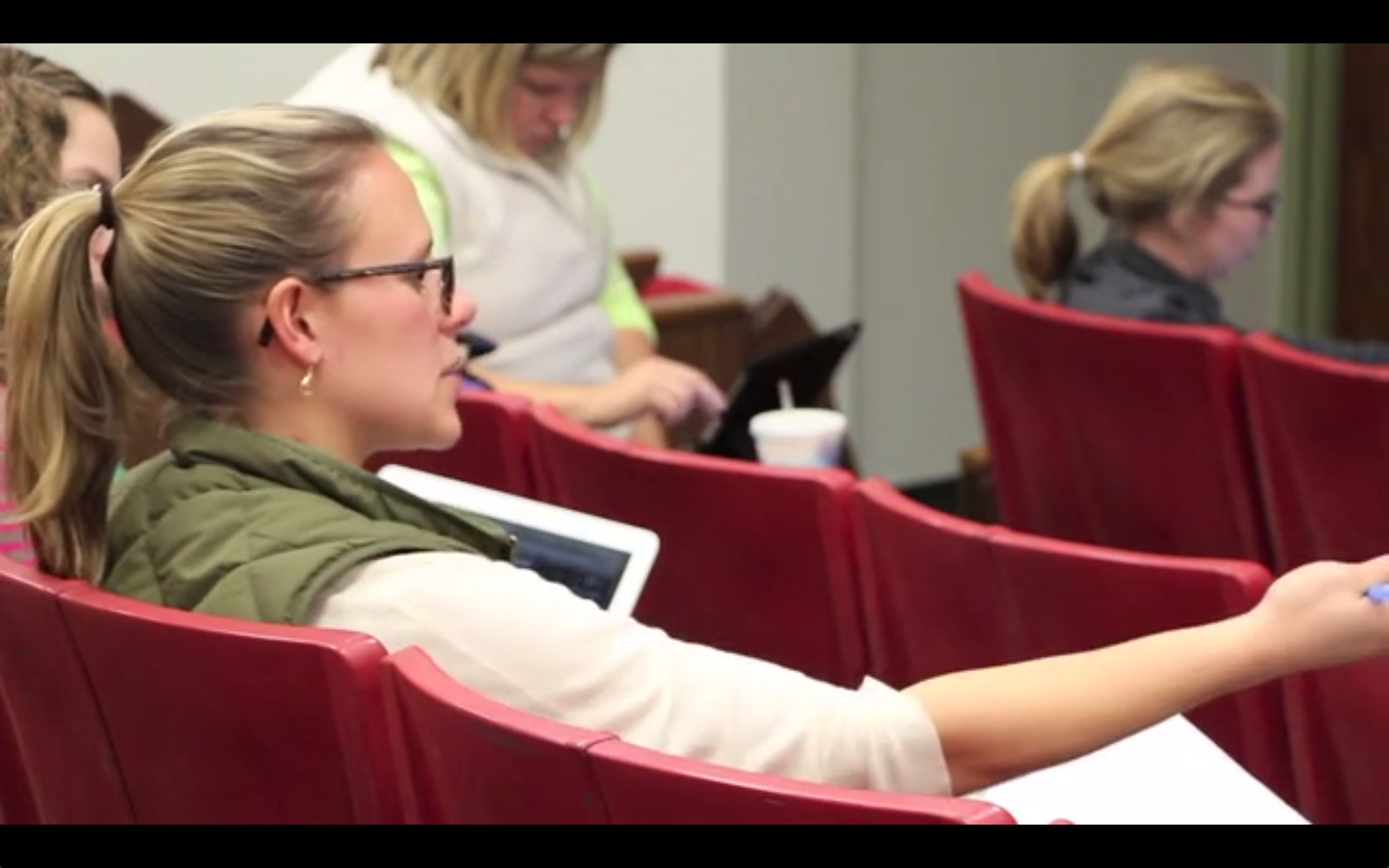
Watch an excerpt and read more about Tara’s talk — “Possibilities of Designing with and for Underrepresented Communities: A Conversation about Participation, Court-involved Youth, and Humility” — in which she provides an overview of her socially engaged social action project, TxtConnect. You’ll also find a link to her slides, which are chock full of useful and important information.
Please share widely!
(Congrats, Tara!)
Neverending “June” — Or: The burden of care

Jef Aerosol public art, near Rue Mouffetard, Paris. For more about Jef Aerosol, see: http://www.jefaerosol.com/
(Photo by Lalitha Vasudevan, 2012)
I started reading “To the End of June: The Intimate Life of American Foster Care” by Cris Beam a few weeks ago. At this point I feel it necessary to say that I am usually a fast reader, a habit nurtured by years of reading voraciously by flashlight as an adolescent, long after “lights out.” And yet, I can only read this book in small chunks, 30 minutes at a time. Beam’s writing is engaging and her style brings stories of foster children’s and foster families’ everyday lived realities into conversation with institutional and legislative history, current social science research, and large scale demographic data sets. In short, her book is compelling. However, I find myself pausing to ponder after each scene is depicted or after one of countless bon mots dropped carefully along the reading expedition.
With the end of the book looming near, I find myself wanting to start the book again, as if I’m hoping for different realities or for the existing ones to change. And it is from this unsettling place of seeking agency that I recently read a related article in the Sonoma Index-Tribune: “The arduous journey of the foster child” by Jaime Ballard.
This is the first piece in a three-part series the newspaper is rolling out to call attention to how California youth experience that state’s foster care system. Like in Beam’s accounts, the voices of the youth who were interviewed for the piece call up questions about their caregivers and the conditions in which they lived prior to entering the system. Children being removed from their homes is a scenario that plays out over and over again in my mind in technicolor (and occasionally my mind drifts back to that vivid image of Elián González, the young Cuban boy who was forcibly removed from his relatives’ home; of course the circumstances were altogether different. Still, the image remains.) What must the circumstances be for a child to be removed and then placed in one of any number of placements that themselves may be viewed as “unstable” in a different light.
My friend and colleague (and YMEJ team member), Melissa Wade, is all too familiar with such stories and reminds me again and again that there must be an “imminent threat or danger to the life of a child” in order for a child to be removed. And in the same breath shares the story of a young person who was removed from her home because her parents were found guilty of “educational neglect,” or not enforcing her school attendance. One wonders not only who is making the consequential decisions that drastically alter a child’s path, but also how those decisions are informed. Who is on the side of the youth?
What stands out in the Sonoma news article as well as in Beam’s book are the many faces of pain evident in the words, actions, and postures of the young people who are held in suspended reality as a “dependent of the court.” To whom do I belong? To whom do I show allegiance? By whom will I be protected and nurtured? Who truly has my best interests at heart?
These are among the questions that lie underneath the sentiments that youth like Angie (pseudonym) express:
Or when Phoenix, another foster youth quoted in the article, says:
These recollections are woven through a system that is characterized by and “strenuous and sometimes harrowing court proceedings” and “too few foster families available to care for children in need.”
Ballard’s article concludes with a note of advocacy: for more people to take on the role of Court Appointed Special Advocates, or CASA*. In some ways, the piece plays to the public’s desire to do something in response to reading about the situations that comprise (and often compromise) the wellbeing in these young people’s everyday lives.
[Millie] Gilson [director of the Sonoma County CASA branch] said, “There is a proactive point of order. I would encourage everyone to become a CASA, to get involved. Being a CASA is one of the most unique forms of citizen involvement, and it’s very much a staple of the foster care system.”
Both Beam’s and Ballard’s writings about the foster care system, albeit in two different locales, offer glimpses into everyday realities of thousands of children and youth and the families who care for them, both biological and foster. But as the stories they weave also suggest, there may be a significant role for non-family adults to play, thereby begging the question: Who is responsible for the care of all the children? (and relatedly, Who is implicated in their care?**)
Whether relying on the interested other — the socially engaged stranger — is a flaw or force of the foster care system is debatable. But that children and youth need caring adults in their lives — to inspire and nurture them, to push and attend to them, to listen and provide guidance, to see them — is not.
*For more information about CASAs, including the process for applying to become a volunteer CASA, check out these resources:
- National CASA Organization
- CASA – NYC (for New York City children)
- CASA Volunteers Advocate for Children
**During last year’s YMEJ Seminar, Joe Riina-Ferrie (then a graduate student mentor in the course; now a member of the YMEJ Project/Teaching Team) pursued an inquiry into the idea of care. His yearend publication brought together this inquiry in the form of edited interviews with members of the seminar, including youth, other graduate student mentors, and other members of the teaching team. Listen to these multiple perspectives on care:
 Youth, Media, and Educational Justice