Mentoring in Harlem
If you’ve read a bit about us, you know that we are engaged in a project with a lot of moving parts, one of which involves a collaborative mentoring approach that we have been developing over the past year. There will be lots more on this to come… but for now, I wanted to tell you about another great mentoring effort happening in Harlem — a joint effort between Harlem CARES Mentoring Movement and Total Equity Now (TEN) (read what we wrote last week about the great work that TEN is involved in).
Next Tuesday, August 13th, 6:30-8:30pm — Harlem CARES and TEN are sponsoring a mentoring fair at the Minisink Townhouse (at Lenox Avenue and 142nd Street). From an article published in DNAInfo New York:
“More than 3 million children are being mentored in the United States today but another 15 million are waiting to be mentored. Many grassroots organizations simply don’t have the resources to recruit enough adults.”
and
“The fair hopes to eliminate the disconnect between adults who might be interested in mentoring young people and the many organizations that facilitate such relationships by putting them together in the same room.”
In our work with court-involved youth over the past two decades, we’re learned that not every young person will want a mentor, some won’t want to participate if the experience is called mentoring, and some may not realize that a mentor is exactly what they need in their corner. But one thing is certain: young people need caring adults in their lives. Young people flourish in unexpected ways when they know they have someone (and hopefully a few someones) in their corner. And it is here where we see the richness of mentoring to exist and it is in the liminal spaces of a caring ethos that unimagined possibilities may begin to thrive.
These aren’t mere platitudes. They are words written by someone who has been fortunate to have had mentors throughout her life; for their wisdom, gentle guidance, occasional admonishments, and constant strength, I will be forever grateful.
So, if you’re a “committed adult” who can imagine “building another positive, strong relationship with someone who can mirror to young people what is possible in their lives,” then head on over to the Mentoring Fair on August 13th.
“Hunger hurts everyone” – A Place at the Table
After a sweltering July, I took pleasure in the breezy feel of an unlikely August Sunday afternoon. I switched on the tv as background noise, but quickly became drawn into the stories being shared by two women as they sat and talked with the always astute Bill Moyers. The topic being discussed, among other things, was the film “A Place at the Table,” and Kristi Jacobson, one of the film’s directors and producers, and Mariana Chilton, director of the Center for Hunger-Free Communities, were Moyers’ guests. Their argument was relatively simple: hunger hurts everyone.
I found myself nodding along, but was unprepared for the footage they shared from the film, which also documents the efforts of Chilton and her Center against the backdrop of the federal funding cuts to the Supplemental Nutrition Assistance Program (SNAP). One loving mother eats a bologna sandwich in the kitchen after serving her two small children a portion of pasta each. She does not “look hungry” as the argument sometimes goes, says Chilton, who notes in a comment to Moyers after this scene is shown that the mother even hides her nutritional sacrifice from her children.
We have seen this narrative many times: parents who care deeply for their children, but who are still unable to provide the necessary basics. Where are they meant to turn? What supports exist for adults who are working full time, often more than one job, and whose wages keep them perpetually “food insecure” — the term used throughout the film to signal an all too common phenomenon: not knowing where one’s next meal is coming from.
Moyers’ guests talk policy, change, action, and urgency, and yet the parting words have to do with the struggle to get noticed by legislators for long enough of a period to actually effect change. Too mired in uninformed definitions of dependency and misguided notions of socialism are the political arguments that seem to surface any time issues of great urgency — and this includes hunger as well as shelter, safety, and wellbeing of children — are brought into the realm of legislation.
It’s enough to make one ask what else can be done at the local, community, neighborhood level. This is one of the reasons I appreciate the multi-tiered efforts of Chilton’s Center at Drexel University that seems to bring together families — who they are calling “Witnesses to Hunger” — with a shared focus on community-based projects, actions, research, and policy.
Here’s another link to PBS Newshour footage about the film, featuring clips and additional interviews:
And in case you were wondering… yes, this is where YMEJ is headed. And we are thrilled to have learned about the Center for Hunger-Free Communities as inspiration. Universities, too, can be part of the work and not only in the business of posing problems and solutions.
Link to Moyers’ broadcast – or watch the complete program here:
Click for more resources connected with hunger, nutrition, and poverty.
Harlem: Community Milestone
Celebrating the 5-year anniversary of Total Equity Now (TEN), held last night at the very fabulous Astor Row Cafe in Harlem. TEN was founded by Joe Rogers, Jr. and has as its mission, “Empowering Harlemites as active participants and decision makers in advancing educational excellence and equity across our village.”
A few photos** below — but first, don’t forget to:
- #rockthosereads – it’s the 1st of the month! Click here to know more about the “Literacy Across Harlem” initiative.
- Check out and “like” TEN on facebook.
- Follow TEN on twitter (@TotalEquityNow).
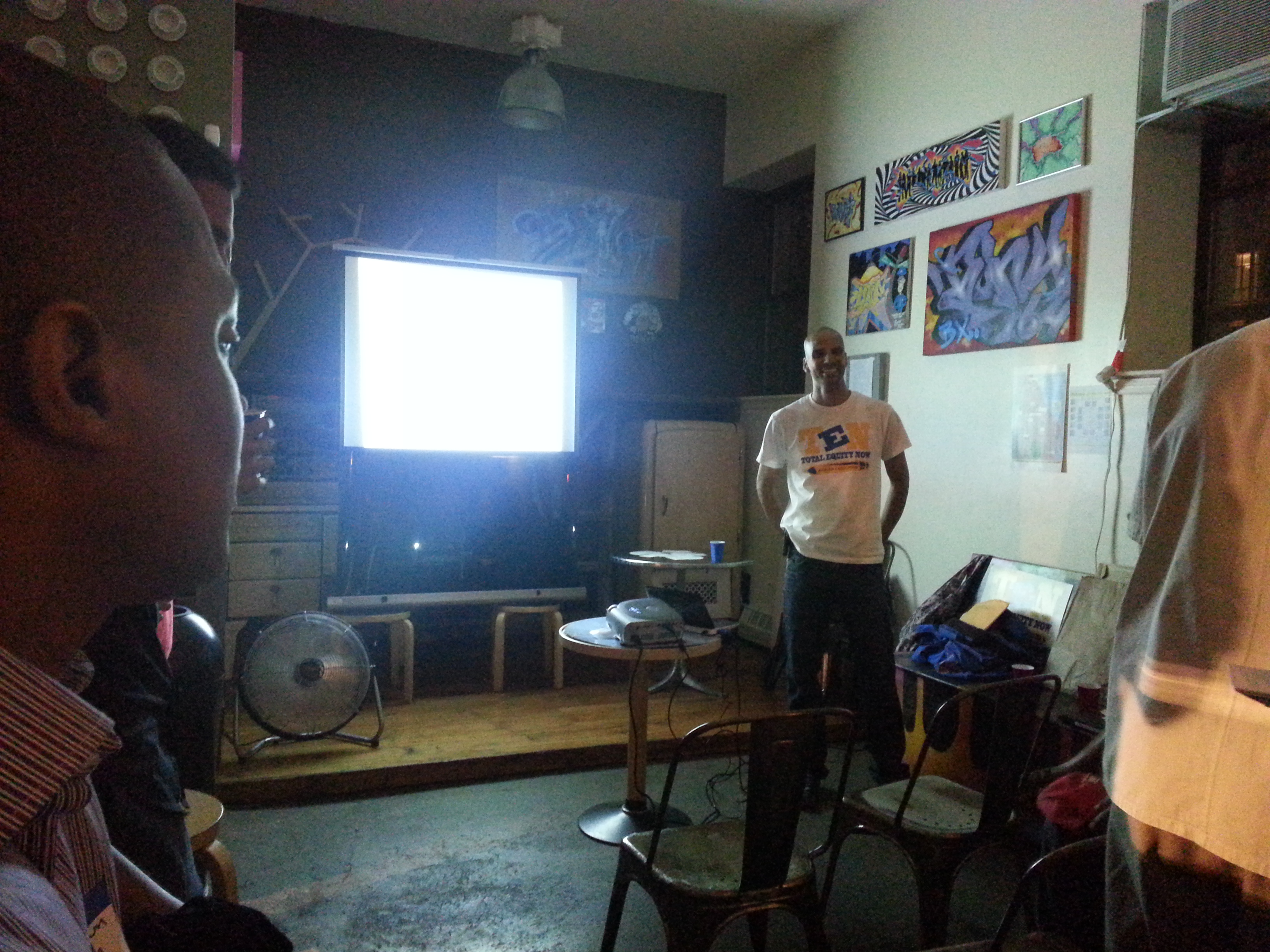
TEN Founder Joe Rogers, Jr. getting ready to kick off a presentation highlighting the past 5 years of work

A glimpse of the artwork around the Astor Row Cafe (I’ve been told to check out the bathroom, that also features some beautiful art — next time!)
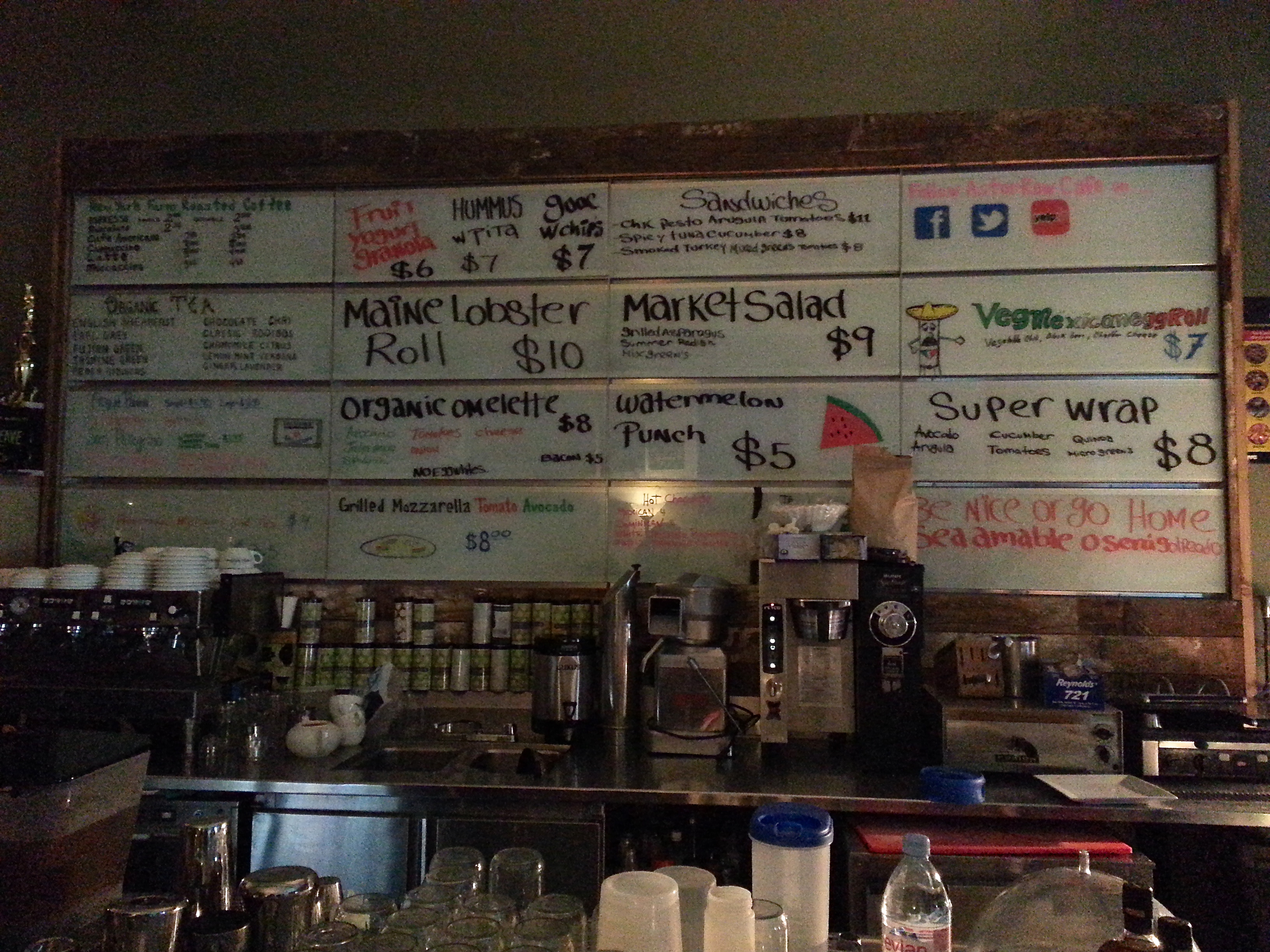
The tasty looking menu at Astor Row Cafe, the hosts for the evening.
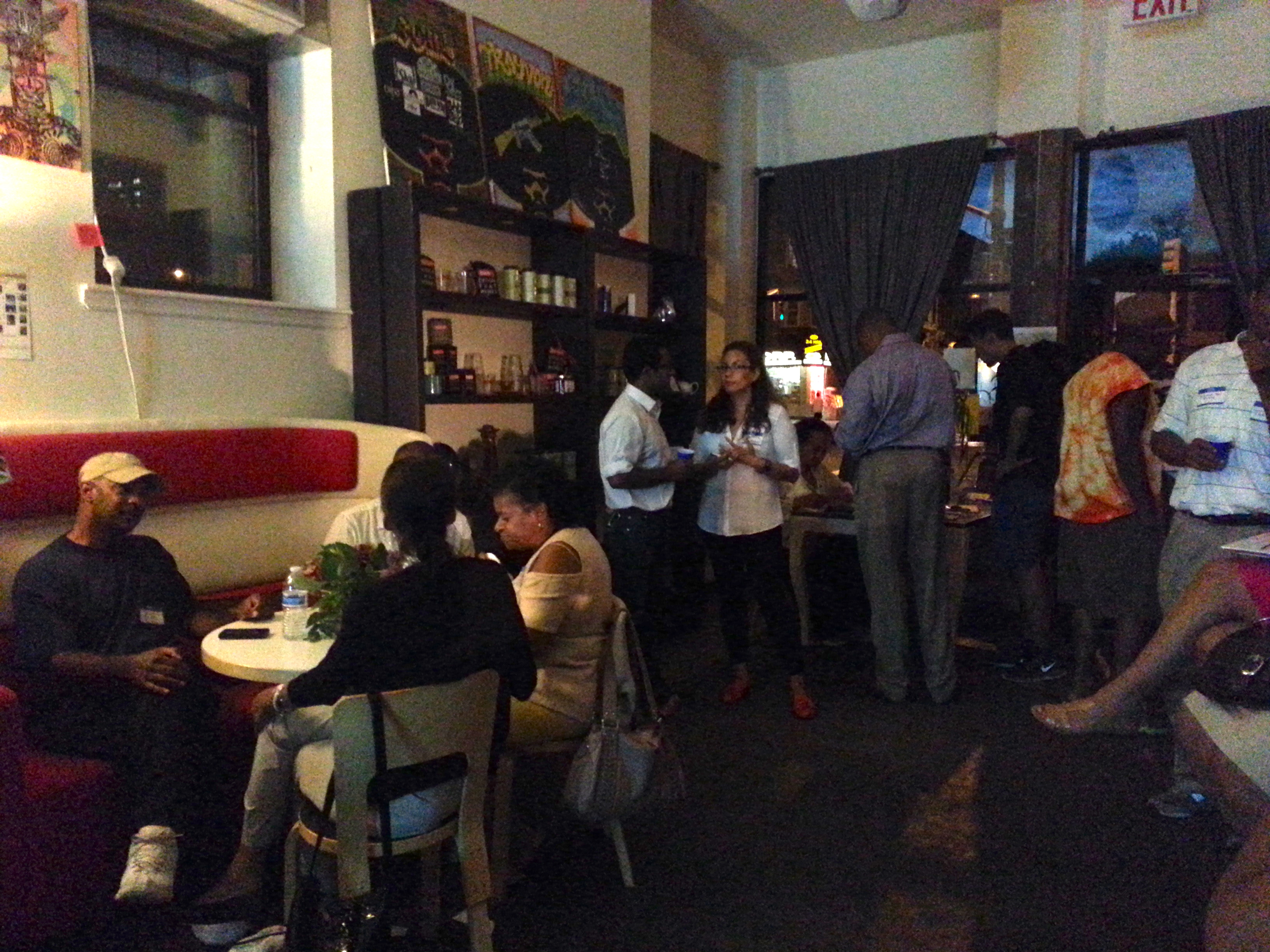
TEN supporters mixing and mingling — a great showing last night!
** sorry for the grainy pics — didn’t want to use the flash in people’s faces.
New reading
Look what we’re reading/watching this week:
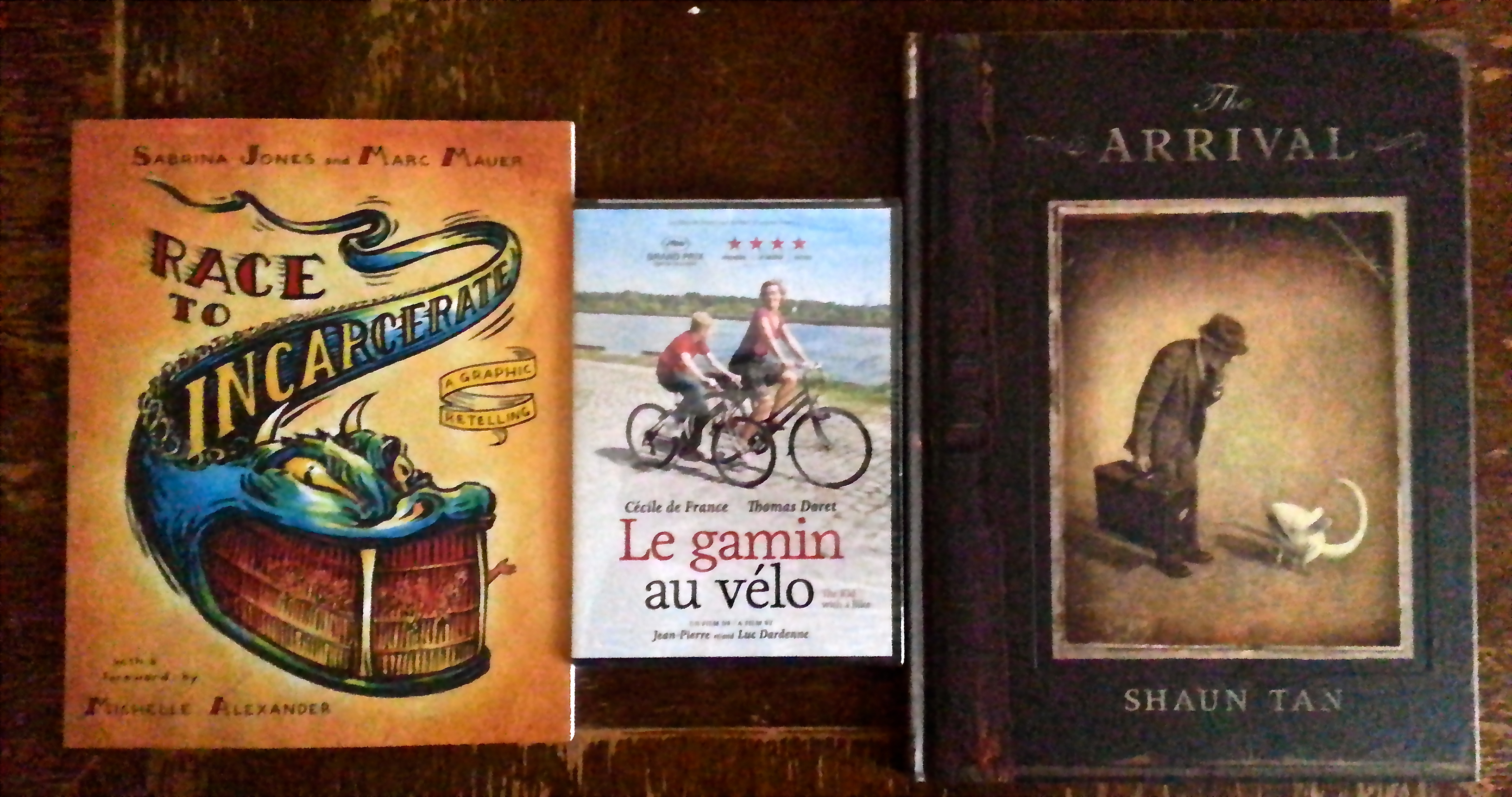
- Race to Incarcerate: A Graphic Retelling — by Sabrina Jones and Marc Mauer: An update of Mauer’s popular text about the exponential growth of the prison industry and the criminal justice system.
- Le gamin au vélo (The kid with a bike): about a young boy whose father gives up his parental rights and who is taken into care by a local hairdresser; she becomes his family.
- The Arrival — by Shaun Tan: A stunning, wordless graphic novel about a man’s journey to a new a land, full of the emotion of being lost, found, mis-read, welcomed, and seeking and finding home.
Educational Justice — online video resources
The Global Action Project (G.A.P.) has a rich history of pursuing and advocating for effective social change through innovative uses of media. In preparing for Year 2 of our YMEJ Seminar, we found a collection of videos that G.A.P. has listed under the category of Educational Justice. Perfect, right? The videos (short flims, PSAs) address educational issues related to:
- undocumented students
- youths’ legal rights
- homophobia and violence
- the school to prison pipeline
This one in particular caught our eye:
This video questions why people leave school or fail to graduate. Rather than focusing on the more commonly held idea of “drop outs,” the video examines the trends of push-outs, and the many ways that young people feel discouraged by the educational system. Interviewing educational researchers, students, and each other, we try to present the stories behind the statistics. – See more at: http://global-action.org/video/set#sthash.9eM2qbfj.dpuf
Here are a couple of other online video repositories that include short films in a variety of formats that take up issues of social change and education in a wide embrace:
- The Media that Matters Film Festival — click here for the collection related to youth; explore the rest of the site for films on other topics including economic justice, gender, politics, and more.
- 3MinuteMedia – click for 3 years’ worth of short films under 3 minutes in length on topics such as the women’s revolution in Egypt, recycling, the arts in schools, and marriage equality. (There’s a call for entries out now for submissions for the 2013 festival.)
Follow GAP on twitter: @gapyouthmedia
Follow 3minutemedia on facebook and twitter
Poverty: A global perspective
Hungry mothers, starving children
–by Mathangi Subramanian (TC alum, Fulbright Scholar), writing for The Hindu
Excerpt:
“Too often, we blame poverty on the poor. It is easier than admitting our complicity in the systems that reproduce our privilege and reinforce the hardships of others. After all, if we were to truly commit to eliminating poverty, we would have to sacrifice. We would have to pay higher taxes, make space in our neighborhoods for affordable housing, send our children to publicly funded government schools, and hold our politicians accountable for our most vulnerable citizens. Instead, we shake our heads and sigh when the media tells us what we want to hear: that the death of children is not in our hands.”
Foster care in fiction
This summer, as we prepare for Year 2 of our project, we are scouring the web and bugging our friends and everyone we meet to share interesting resources with us that represent the lives of foster youth in different ways.
The new ABC Family tv show The Fosters debuted this summer and attempts to raise important questions about institutional, social, and cultural context of the lives of youth who are tethered to the foster care system.
And we’ve just learned about a fascinating sounding novel called The Panopticon, a novel by Jenni Fagan that focuses on the life of Anais, a young woman who has grown up in foster care and finds herself being sent to “the Panopticon, a home for chronic young offenders.” More on this after we’ve read it through.

Here are a few others that we’ve read and loved and discussed during Year 1 of the project — not all are exactly about the foster care system, but all do take up questions and themes of home, belonging, family, kinship, and love:
Becoming Naomi Leon

The Miraculous Journey of Edward Tulane

Geek Girl

Do you have a resource to share that depicts the lives of youth in foster care? We’ve been collecting titles all summer and will soon post a list of both fiction and documentary resources — but we’re always looking for more, so please share your titles with us!
 Youth, Media, and Educational Justice